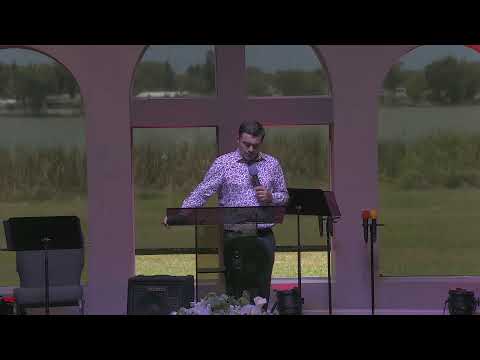
This midweek service centered on an honest question many believers carry into prayer: what do we do with our negative emotions, our pain and confusion, when we come before the Lord? The preacher first reminded us that Scripture is not a book of magic formulas that works automatically. God has set real conditions for our walk with Him, and our difficulties often appear where we fail to do our part, so we are called to cooperate with God rather than treat His Word mechanically.
Drawing on the so-called psalms of cursing, the book of Job, and Psalm 62:8 - pour out your heart before Him - the message used the picture of a full cup. A heart already overflowing with bitterness has no room for God's presence. Job and the psalmist brought their rawest, even shocking words straight to God instead of venting them on other people, and God listened in silence, giving them room to be honest before turning their hearts back to praise and trust.
The evening also welcomed three young people preparing for water baptism and prayed for several in need. The closing call was to be real before God: empty your heart of every burden, and let Him fill the space with His peace, just as Jesus, when reviled, did not retaliate but entrusted Himself to the righteous Judge.
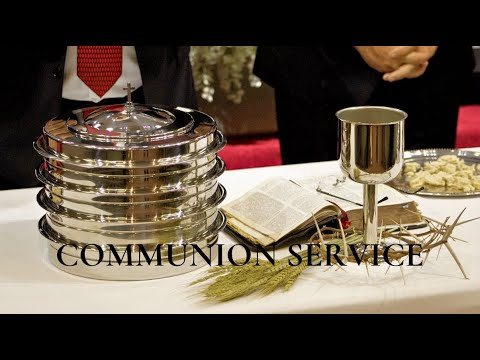
This communion service centers on remembering and proclaiming the death of Jesus Christ. Drawing on 1 Corinthians 11, the pastor reminds the congregation that every time we eat the bread and drink the cup we proclaim the Lord's death until He comes. We are to do this not in gloom or discontent but with faith and joy, receiving the table as a blessing for our lives.
The preaching then turns to Psalm 27 and Matthew 6:33. King David's one desire was to dwell in the house of the Lord and behold His beauty, and Jesus calls us to seek first the kingdom of God. The pastor warns that many believers look to Christ for comfort and happiness rather than holiness, yet nothing unclean enters God's kingdom and the bride must be without spot or blemish, an idea pictured by a stained baptismal robe that could not be used.
The gathering also welcomes new believers baptized the day before, each of whom asked for a Bible as a gift. Christianity is described as a bridge into God's eternal kingdom rather than a life of ease: the enemy will oppose these new believers, but God will guide them as He led Israel through the wilderness. The service closes with prayer for healing, placing our names in the wounds of Christ, and rejoicing that our names are written in the book of life.
The service opened with a call to stay awake and ready for Christ's return (Mark 13). The preacher recalled a train engineer who, half asleep, kept mechanically repeating the signals while the train rolled on - a warning that we too can drift into spiritual sleep, even though our final destination is the eternal Kingdom where Christ reigns.
A young brother preparing for water baptism explained its meaning: baptism in water does not save by itself; it is a public witness that we have died to sin together with Christ, and an act of obedience. The baptism of the Holy Spirit, in turn, gives us power to be witnesses and to keep fighting sin throughout our lives (Matthew 28:19; Romans 6:4; Matthew 3:11; Acts 1:8).
The main message came from Jeremiah 23:29 - God's Word is like fire and like a hammer that breaks the rock. False prophets speak from their own hearts and dreams, but the Lord's true servants declare only what they have heard in His council. Like a stonemason chipping a rough stone so it fits the wall, God uses His Word to break off what is wrong and shape us into living stones of His house. To live with Christ we must first die to self. And as Elijah did on Carmel, when we lay ourselves on the altar, God's fire falls and the people confess that the Lord is God.