Slavic Full Gospel Church logo SFGC

Family

19 sermons on this topic

Walk Worthy of Your Calling

Walk Worthy of Your Calling

At a men's breakfast the speaker opens with his own life - his work in renovations, nearly fifteen years of marriage, and the long, painful road to his children, including the loss of two babies before God gave them a son. From there he calls every man to walk worthy of his calling (Ephesians 4:1), unfolding four spheres God entrusts to us: to serve, to work, to be a husband, and to be a father. On serving, he insists that calling unfolds step by step, so we must be faithful in small things rather than chase position. He gives three signs that God is calling us to a ministry: it fits our personality and gifts and feels natural rather than a burden, it bears fruit that blesses others, and even after burnout God keeps rekindling our motivation, like the fire shut up in Jeremiah's bones. On work, he reminds us that God made us to labor, that profession and calling are not opposites, and that a believer can serve God just as truly as a doctor, nurse, or businessman as from a stage. Turning to the family, he urges husbands to love their wives sacrificially, tracing love from eros to storge to philia to agape - the self-giving love Christ showed at the cross. Fathers, not only mothers, carry the weight of raising children, and a present father shapes them for good. He closes with a sober warning drawn from men who served God powerfully yet lost their families: guard the balance and stay faithful exactly where God has placed you.

The Living Christ and a Life Worth Imitating

The Living Christ and a Life Worth Imitating

The service opened with a reminder that Christ took our guilt upon Himself. Like a just king who would not spare even his own guilty mother from the law, but covered her with his own body and bore the blows in her place, Jesus by His pure sacrifice and blood justified us and opened the way to God. The first message, from a visiting preacher, centered on the resurrection. Drawing on 1 Corinthians 15, he recounted how the risen Christ appeared to Cephas, the twelve, more than five hundred witnesses, and finally to Paul. The empty tomb, the hearts that burned on the road to Emmaus, and disciples who once hid in fear yet later preached boldly even unto death all testify that Jesus is alive today. The resurrection, he stressed, is our justification: Christ died for our sins and rose to rescue us from eternal death and make us children of God. Using 1 John 1:7, he showed that the blood of Jesus cleanses as long as it keeps circulating - just as blood purifies the body while it stays within, so we are kept clean as we walk in the light and remain in fellowship with one another and with Christ. He closed with a personal testimony of God's protection during a hard trip to renew his children's passports. The second message turned to the power of example. Surveying the godly kings of Judah - Jehoshaphat, Jotham, Hezekiah, and Josiah - the preacher showed that parents, and especially mothers and grandmothers, shape the generations that follow. Yet Hezekiah and Josiah walked with God even though their fathers did not, because they humbled themselves before the Scriptures. The call was clear: imitate Paul as he imitated Christ, be holy as God is holy, and leave a Christ-centered example for those who come after us.

A Clean Heart and a Faithful Example

A Clean Heart and a Faithful Example

The service opens with a reminder that only God's word renews and cleanses us. From 2 Samuel 22:31 we hear that God's way is perfect, His word is pure, and He is a shield to all who trust Him, while the story of King Jehoshaphat (2 Chronicles 20) shows worshippers placed ahead of the army because the battle belongs to the Lord. The first message turns to the heart. From Luke 6:45, out of the treasure of the heart the mouth speaks, bringing forth either good or evil. The hateful hearts of Joseph's brothers harmed both their brother and the flock their father had entrusted to them, while David guarded his father's sheep and risked his life for them. God has entrusted each of us with sheep of our own - children, family, those under our care. Like Daniel, who purposed in his heart not to defile himself, and David, who prayed for a clean heart, we are called to keep our hearts pure, for the pure in heart will see God. The second message holds up two fathers, Abraham and Lot. By faith Abraham obeyed and went out not knowing where, looking beyond his circumstances to the city whose builder is God. Lot chose by sight the well-watered plain near Sodom and lost everything, while Abraham left his descendants a lasting blessing. The closing challenge is searching: what example and what values do I pass on to my family? The prayers focus on fathers and on guarding our hearts and our children, especially during the Daniel fast.

Blessed Is the God-Fearing Family

Blessed Is the God-Fearing Family

On the eve of Christmas the church gathers for evening worship, and the pastor opens with Matthew 18:11 - the Son of Man came to seek and to save what was lost. Christ did not come to found a new religion or to sort people into the more holy and the less holy, but like the shepherd who carries home even the dirty, neglected sheep, He came to rescue sinners. The main message turns to Psalm 112: blessed is the one who fears the Lord and delights in His commandments. True blessedness is being happy in God, living a holy life, and serving Him not grudgingly but with gladness. The forgiveness of sins, the preacher says, is the best Christmas gift of all. Looking at the families of Zechariah and Elizabeth and of Mary, he shows that ordinary, faithful homes - marked by prayer, humility, and patience rather than status - are the ones God chooses to use. That leads to a heartfelt word to parents: faith is passed on in the home through the rhythm of daily life, not just through words. Children imitate what they see, so honesty, quick repentance, and unhurried family time matter more than a perfect record. A closing reflection on the Nativity in Luke 2 reminds the church that Jesus was born to lift unclean, lost people out of the mire and make them His holy nation.

The Ladder of Unity

The Ladder of Unity

The pastor opens just after Thanksgiving with gratitude to God, contrasting the peace and abundance enjoyed in America with the hardship in Ukraine, where many cities have no electricity or heat, and he calls the church to stop and pray for Ukraine. He observes how different the congregation is in education, upbringing, language and even appearance, yet one thing binds them together: Jesus Christ saved them and is leading them to His eternal kingdom. Drawing on the fall of Jericho in Joshua 6, the early church praying in one accord in Acts 4, and Paul's plea in 1 Corinthians 1:10, he preaches a message titled 'The Ladder of Unity.' Jericho's massive walls fell not to human strength but to a people who moved together as one, and the early believers saw the place shaken and everyone filled with the Holy Spirit because they prayed in unity. Disunity, he warns, is the enemy's favorite weapon and the common root behind divided churches and rising divorce, even among believers. His picture is simple: two very different people climbing a ladder grow closer the higher they rise. As a family or a church draws nearer to Jesus at the top, they draw nearer to one another. He names what makes such unity possible: the presence of God's grace that softens hearts and even changes our tone, genuine respect for one another, and humility before God. Without that grace, he says, fine music, buildings and polished sermons mean nothing.

Be Steadfast and Immovable in the Lord

Be Steadfast and Immovable in the Lord

The service opened with the dedication of three children, and the first message was addressed to parents. Drawing on the Hebrew midwives who feared God (Exodus 1), David bringing the ark into a home that God then blessed (2 Samuel 6), and Eli who failed to watch over his sons (1 Samuel 2), the preacher urged parents to live without compromise, to serve God freely with their time and resources, and to be truly present in their children's lives, since love joined with time becomes lasting influence. The closing message took 1 Corinthians 15:58 as its theme - be steadfast and immovable. When David returned to Ziklag to find it burned and his family taken, and even his own men turned against him, he strengthened himself in the Lord his God (1 Samuel 30), inquired of God, and recovered everything. The preacher pressed the congregation to find their strength in God rather than in their circumstances. Through Deuteronomy, Isaiah, James, and Paul's words to Timothy, he called believers to lift up weak hands, to sing psalms in times of despair, and to hope in the Lord who renews strength like the eagle's wings (Isaiah 40:31). Christ is the tested cornerstone, and those who trust in Him will never be put to shame. The gathering ended with prayer for the sick, the grieving, a wounded soldier, and a struggling family.

Discerning God's Will at the Crossroads

Discerning God's Will at the Crossroads

A visiting preacher, in the United States for over twenty years and now in town while his wife receives treatment for cancer, opens in Ephesians 5 and asks the church to pray for his family. He centers his message on Ephesians 5:15-17 - walk wisely, redeem the time, and understand what the will of the Lord is. Life, he says, is a series of crossroads where we must choose which way to turn, and the command to understand means we must not rush but discern whether a path truly comes from God. God guides through two sources: His Word, a lamp to our feet, and the Holy Spirit, who leads us into all truth. The preacher illustrates from his own life - a rushed car purchase he regretted, his wife's illness when three strangers independently pointed him to the same clinic, and an agonizing decision about moving his family. Instead of deciding alone, he laid two slips of paper before God and the congregation in prayer, and went out released and blessed. From Genesis 13 he warns against Lot, who chose the well-watered plain by the sight of his eyes and ended up raising his children among wicked men. Many people chase money and good jobs and lose their children. So bring every decision to God, weigh the consequences for your whole family, and ask the church to pray; when heaven approves, you will never weep over the choice.

Present Fathers and a Hunger for God

Present Fathers and a Hunger for God

On Father's Day the church gathers to honor earthly fathers and to lift up the heavenly Father who, as Deuteronomy teaches, disciplines and corrects his children in love, and who in Christ has fixed the greatest mistake of our lives - our sin. The main message draws four lessons from the life of Eli the priest in 1 Samuel. Eli served God faithfully, yet his own sons did not know the Lord. A father's faith must reach his whole household, like the resolve to say 'as for me and my house, we will serve the Lord'; priorities must keep God first; real love sets boundaries instead of ignoring sin; and lasting influence grows from presence and relationship, not love alone. The enemy aims at fathers because the home's spiritual covering rests on them. A closing word turns to the Holy Spirit. To truly encounter God you must hunger and thirst for him, like the young man of the Welsh revival who sought God for hours, or the 120 who stayed for Pentecost while others drifted away ten minutes before the fire fell. Baptism in the Spirit is being immersed in fire, and the simplest, most powerful prayer of all is just 'help,' because the Spirit is our Helper.

Trusting God's Word, Living in His Kingdom

Trusting God's Word, Living in His Kingdom

God's word is living and never changes. Drawing from Zechariah's Spirit-filled prophecy at the birth of John the Baptist (Luke 1:68), the first message showed that God speaks of redemption as already accomplished, because He stands outside of time and calls the things that do not exist as though they already are. By Christ's wounds we are already healed, and like Abraham, who against all human hope believed God's promise and grew strong in faith, we are called to take God at His word and to keep going to the very end. The second message turned to the Kingdom of God. Jesus began His ministry calling, Repent, for the kingdom of heaven is near. A kingdom has laws and order, and Scripture says the kingdom of God is not food and drink but righteousness, peace, and joy in the Holy Spirit. We must be born again to enter it, and we live by its laws right here on earth - first in our homes, honoring parents, seeking peace instead of insisting on our own way, and letting the Spirit bring joy where there was conflict. A young man publicly gave his life to Christ and joined the church, and the congregation prayed for families under strain and for those who are sick. The reminder ran through it all: the blessing of the church carries real power, and the kingdom of God can begin in our hearts today.

Reaching the Heart of Your Child

Reaching the Heart of Your Child

This service falls during the church's weeks of prayer and fasting, and the message, preached by brother Oleg, turns to the family and the raising of children. He insists that good parenting begins with the parents themselves: we must keep learning, because every child is different and each one is, in a sense, raised for the first time. Parenting cannot be left to chance. He points to how little time we actually spend with our children compared with school, screens, and the surrounding culture, warning that if we do not enter their world, someone else will shape it. Drawing on Titus 2 and Romans 8, he urges parents to lean on God's grace and to keep their children rooted in the Word, in prayer, and in the church. The goal is children who can one day live without us, yet live rightly and godly. Sharing how time spent fixing dirt bikes and an old car turned his son into a friend, he calls parents to put down the phone, find time, and reach the heart of each child, bringing them up in the instruction of the Lord rather than provoking them.

A Threefold Cord for Our Families

A Threefold Cord for Our Families

This midweek service falls during the church's season of fasting and prayer for families. The first preacher opens in John 10, where Jesus says His sheep hear His voice and no one can snatch them from His hand, and testifies that if he had to sum up his whole life in a single word, it would be the mercy of God. From Paul's letter to Titus, a second message reminds every believer that the character God requires of church leaders belongs just as much in our homes, where each of us serves as a priest to our own family. Children copy what they see, so parents who walk with God leave the deepest mark. Looking at Abraham and at Joseph and Mary, we see God entrusting His promises to faithful families, and Jesus' pledge not to leave us as orphans but to send the Holy Spirit, who still works in us and changes us today. A closing message draws on Ecclesiastes 4:12 - a cord of three strands is not quickly broken - and on Job, who rose early to sanctify and pray over each of his children one by one. Giving, prayer, and fasting are the three strands that overcome greed, pride, and the flesh; our true offering is our own life laid down, and our only hope is the blood of Christ that makes us clean.

Without God We Can Do Nothing

Without God We Can Do Nothing

This Sunday gathering opened in worship and in remembrance of brother Leonid, who had just passed into eternity. The church was comforted by the word from Revelation that those who die in the Lord rest from their labors, and their deeds follow after them. The main message pressed one conviction: we cannot accomplish anything that lasts without the Holy Spirit. Like Daniel and his friends who sought God before the king, like David whose harp quieted Saul not by skill but by God's anointing, and like Paul who refused human wisdom and chose to know nothing but Christ crucified, the preacher urged the church to lean on the Spirit's power in ministry, in the home, and in raising children. A second word, from Psalm 127, taught that unless the Lord builds the house we labor in vain. A God-honoring home rests on humility instead of pride, on a real altar of prayer, and on forgiveness, respect, and love among family members. The church then began a week of fasting and prayer for families, closing with intercession for the grieving, the sick, and the lost, and the assurance from Romans 8 that nothing can separate us from God's love.

Raising Children Who Truly Love God

Raising Children Who Truly Love God

This Christmas-season service centers on a sobering question every believing parent must face: will our children love and serve God for themselves, from the heart? Drawing on the story of Eli the high priest and his sons in 1 Samuel, the preacher warns that a person can be deeply involved in ministry and still raise children who do not know the Lord. He draws out three lessons. First, teaching our children to love God is our own responsibility, not the church's or Sunday school's, just as Abraham was chosen to instruct his household and as Proverbs calls grandchildren the crown of the aged. Second, nothing corrodes a child's faith like double standards: Eli quietly took more than his portion and his sons went even further into sin, while Job and Joshua kept their homes blameless ('as for me and my house, we will serve the Lord'). Third, we must be genuinely present in our children's lives; Eli learned of his sons' evil from outsiders, while Job rose early each morning to pray for each child by name. The service closes with a Christmas message. The birth of Christ tore open the wall between God and humanity. Born not in a palace but in the lower room of a humble home and laid in a manger, the King of kings made Himself accessible to everyone, rich or poor, shepherd or wise man, so that anyone could come, worship Him, and receive new life.

Building a Family God Can Bless

Building a Family God Can Bless

In this family seminar, a visiting pastor and his wife, married twenty-four years, share the practical wisdom that has kept their marriage joyful. They begin with a foundation: God is the author of marriage. He created the family and blessed it from the start, so every home carries the potential to be happy. The trouble is that what God created only works when God remains present in it - and so many marriages, even Christian ones, fall apart when He is quietly pushed out of the center. From there they walk through one honest counsel after another. Reconcile the same day and never let an argument smolder overnight. Drop the word divorce from your vocabulary and treat marriage as a lifelong covenant. Leave father and mother and truly cleave to your spouse. Learn the love language your husband or wife actually speaks. Guard quality time, refuse to argue in front of the children, and never throw past failures back in each other's face. They speak frankly about the two areas that wound families most - money and intimacy. Live within your means, fear debt, and keep the marriage bed healthy and free of manipulation. Above all, keep God first and serve His church together as a family, because the couple who builds their whole life around the Lord is far healthier in every other way.

Blessed Are Those Who Die in the Lord

Blessed Are Those Who Die in the Lord

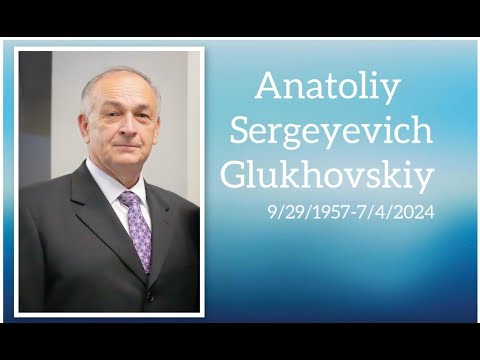
This memorial service honored brother Anatoliy Glukhovskiy, a deacon, preacher and worship leader who helped found the church and went home to the Lord suddenly on July 4, 2024, at the age of sixty-six. His family and fellow ministers remembered him as a sincere man of God, a devoted husband and father of six, who loved Scripture so deeply that he could explain it plainly enough for a child to understand, and who led the congregation in song with his guitar. Speaker after speaker anchored their comfort in 1 Thessalonians 4: believers do not grieve like those who have no hope, because the dead in Christ will rise and we will be caught up to meet the Lord and be with him forever. Drawing on Psalm 84, they reminded the grieving that true strength comes from God, who turns even the valley of weeping into a place of springs. The closing message used the parable of the growing seed in Mark 4: when the grain is ripe, the Lord sends the sickle. Anatoliy's life had borne fruit, and God gathered him at the appointed time, not by accident. The service ended with a tender appeal to receive the seed of life today, to cherish loved ones while they are near, and to be ready at every moment for the meeting that awaits us all.

The Father's Role in the Family

The Father's Role in the Family

On Father's Day the church gathers to thank God and to honor fathers. The message centers on the father's role in the home and opens with Deuteronomy 6, where God commands His people to keep His word in their hearts and to teach it diligently to their children - at home and on the road, when lying down and rising up. The preacher stresses that a father cannot be replaced. He points to how children who grow up without an engaged father suffer, and warns that the enemy deliberately attacks what holds a family together. Every man is called to be a priest in his own home, responsible not only for daily bread but for the spiritual life of his children. Drawing on Malachi, Mark, Ephesians and Proverbs, the sermon calls children to honor their father and mother - the first commandment with a promise of a good and long life - and calls fathers to be both physical and spiritual fathers who raise wise children walking in truth. There is no greater joy for a father than to see his children living for God.

True Riches: Trusting God, Not Money

True Riches: Trusting God, Not Money

This Sunday service marked a special day for the church - the Sunday school graduation of its teenagers. It opened with worship and a prayer over the children, rooted in 1 Peter 1:22 and the call to set a young person on the right path early, with a reminder that faith and obedience pass to the next generation chiefly through the example of parents. The main message explored the difference between simply having money and being truly prosperous in God's eyes. Drawing on the rich ruler in Luke 18, the warning of Deuteronomy 8, and Paul's counsel in 1 Timothy 6, the preacher cautioned that the love of money quietly pulls people away from faith, while everything we own - our home, our work, our income - comes from God's hand. By the measure of Scripture, anyone with food, clothing, and shelter is already rich. He shared a childhood story of being tested with a few coins to learn generosity, then closed with a striking thought: money can buy a house but not a home, a bed but not rest, medicine but not health. Real security and lasting joy come from trusting God as the true Provider and giving freely to others.

What Kind of Mother Are You?

What Kind of Mother Are You?

On Mother's Day the pastor honors mothers as carriers of one of the greatest callings on earth. Reading Matthew 10 and 1 Corinthians 7, he shows that a mother 'loses her life' for her children and her husband: bearing children in pain, giving up beauty, health and strength, and often releasing her husband into ministry. Yet whoever loses their life for Christ gains it back, and with a double reward. The main message, 'What kind of mother are you?', retells the birth of Moses (Exodus 2, Hebrews 11). His mother Jochebed, whose name means 'Yahweh is my glory,' hid her son, sealed a basket with pitch, and set him on the river with tears and prayer. In the years she nursed him she planted such godly values that Moses later refused Pharaoh's palace in order to suffer with the people of God. He adds the example of Ronald Reagan's praying mother Nelle and of his own mother, who led her whole family to Christ. The conclusion is simple: a mother's true glory is prayer, and through prayer and example she lays the foundation of her children's faith and shapes where they will spend eternity.

Forgive at Home, Shine to the World

Forgive at Home, Shine to the World

This Sunday missionary service began with a reminder that each of us first heard the gospel because someone - a parent, a friend, a missionary - carried it to us. The leaders urged the church to worship God not only for two hours on Sunday but with their whole lives through the week, because a holy life is itself the truest way the gospel is preached (Colossians 3:16-17). How we live, speak, and act lets the light within us shine and makes us the salt and light of the world. The main sermon turned to how we react when people hurt us. Drawing on David's lament over a close friend's betrayal (Psalm 55) and Paul's command not to let the sun go down on our anger (Ephesians 4), the preacher insisted that we are not responsible for those who offend us, only for how we respond. Forgiveness is a decision, not a feeling, and carrying unforgiveness wounds both spirit and body. He contrasted David, who poured every hurt out to God in the house of the Lord, with his wife Michal, who bottled up her pain until one bitter quarrel fractured their home - a warning to guard our marriages and families. The service closed with missionary testimonies and a sending. The Samaritan woman at the well and the man freed from demons became the first to tell others what Jesus had done; an evangelist recalled bold open-air preaching in Odessa in 1988 and a terrifying plane landing that silenced the mockers and opened hearts. A Bible school team preparing for Guatemala shared their songs and stories. The final word reframed missions for everyone: a missionary is simply someone who faithfully carries out the task God has given, whether preaching abroad, running the sound and cameras, or raising a child in the fear of the Lord (Colossians 3:23-24).