Slavic Full Gospel Church logo SFGC

Forgiveness

23 sermons on this topic

Forgiveness at the Cross When Life Is Unjust

Forgiveness at the Cross When Life Is Unjust

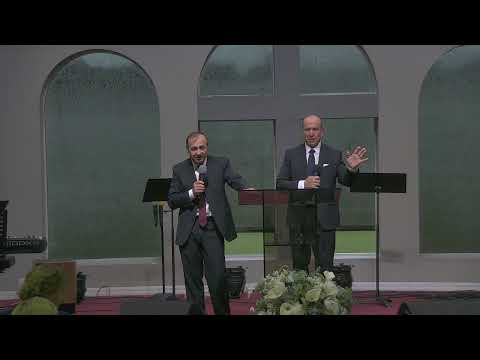
A guest preacher from Borispol in Ukraine reminded the congregation that the church, like the pool of Bethesda, is the place where we come to touch God - and that in a world still full of the wounded and the needy, that meeting matters more than ever. Drawing on 2 Corinthians 2:14, he gave thanks that God always leads His people in triumph in Christ and spreads the fragrance of the gospel through them in every place. He urged everyone, especially the young men, to labor for God's kingdom without waiting for an easier day, because every hour given to God is counted and rewarded. Turning to Luke 23:32-34, he pointed to Jesus, led away to die between two criminals though He had done no wrong. He told of believers from his own church seized off the street and taken to the front: a worship leader who stepped on a mine and now praises God seated on a prosthesis, and brothers who never came home. Like them, Jesus was treated unjustly - yet from the cross He did not call for punishment but prayed, Father, forgive them. The heart of the message was a question: what do we do when we are wronged, slandered, or robbed? The answer is to do as Christ did - entrust our lives to the Father, trust His will in which not a single hair falls without Him, and answer injustice with prayer and forgiveness. We live in the days of Matthew 24, when wars are not yet the end and our faith must not fail when it is sifted like wheat.
Jesus, Our Prince of Peace

Jesus, Our Prince of Peace

This Christmas message begins with a simple truth: without the birth of Jesus there is no cross and no resurrection. The blood of Christ points us straight to Calvary and to what He accomplished for each of us. Drawing on Isaiah 9:6, the preacher meditates on one of the Messiah's names - Prince of Peace - and asks what kind of peace this child actually brings. He traces that peace through three relationships. First, peace with God: sin separated Adam from his holy Creator, but through the death of the Son we are reconciled to the Father (Romans 5). Second, peace with one another: sin breeds division at home, in marriage, and with neighbors, yet when we say with Paul "no longer I, but Christ," we begin to forgive and embrace, because He first forgave us. Third, peace in the heart: instead of drowning in worry and fear, we run to Jesus, who numbers the hairs of our head and cares for us more than for the birds. The sermon closes by reminding believers who they are - a chosen people, once not a people but now the people of God, carrying a sure hope of eternal life and the new Jerusalem where God will wipe away every tear. Following Christ does mean a daily fight against sin and the flesh, a cross we should not try to make lighter, but it is a privilege rather than a burden.

Forgiveness and the Father's Discipline

Forgiveness and the Father's Discipline

The service opens from Hebrews 2, urging us to pay the closest attention to the great salvation first spoken by the Lord, so that we never drift away from it. The preacher then brings to a close a study on forgiveness drawn from Matthew 18:21-35, Jesus' parable of the unforgiving servant, which He told in answer to Peter's question about how often we must forgive. Before applying the parable, the preacher teaches how to read it. A parable is an analogy, not a math equation: it has one point of contact that the author himself draws, while the surrounding details need not all be decoded. He illustrates from Jeremiah 13:23 - the Ethiopian's skin and the leopard's spots - to show that no one can change his own nature by willpower, which is why a sinner needs not repair but a new birth and a new heart. Applying this, he shows that forgiveness stands at the heart of the story: Jesus tells Peter to forgive not seven times but seventy times seven. The parable speaks of life here and now, not of eternity; when we refuse to forgive, God disciplines us on earth to lead us back. Yet this is no license to hold a grudge or to presume on grace, for it is a fearful thing to fall into the hands of the living God. The pastor closes by reminding us that God's chastening, like a loving father's, is for our good, shaping us into the image of Christ.

Abide in the Word, Walk in Freedom

Abide in the Word, Walk in Freedom

The midweek service opens with the Beatitudes and turns to John 8:31-43. Jesus speaks to people who already believe in Him and reminds them that faith is only the starting point. Real discipleship means remaining in His word, because that is where truth is found, and truth is what sets a person free. The preacher compares Scripture to a vaccine against sin that stops working the moment we stop reading it. Using the contrast between a slave and a son, he explains that a slave is bound by sin and lives by his own will, while a son does the Father's works of faith, love, and obedience and stays in the house forever. Through James 1 and a child's Bible-study homework he traces the path from slavery to sonship: honestly face your sin, trust the Son, act like a son or daughter by forgiving and loving and giving freely, and stay close to the Father in prayer and thanksgiving. A second message returns to forgiveness in Matthew 18 and urges careful, honest reading of the Bible. Just as a child colors a picture however he pleases, or commenters answer a question that was never asked, we can read our own ideas into the text. Jesus' parables say the kingdom is 'like' something, an image pointing to a spiritual truth, so our task is to find where the earthly story meets the heavenly lesson. Refusing to forgive is no small matter, because it places us back into the very debt that Christ already paid.

Is Your Treasure Truly Hidden in God?

Is Your Treasure Truly Hidden in God?

Drawing on a psalm of David (Psalm 27:4) and the third chapter of Colossians, the first message asked a searching question: is our happiness really hidden in God, or have we quietly placed it in our children, our health, or our possessions? When people anchor the whole meaning of life in family or wellbeing and tragedy strikes, they collapse into despair and become easy prey for discouragement. The preacher urged believers to examine their hearts, notice what truly brings them joy, and watch how they spend their free hours, because where our treasure is, there our heart will be. A second teaching, continuing a study on prayer, turned to forgiveness through the parable of the unforgiving servant in Matthew 18. The man was forgiven an unpayable debt of ten thousand talents, a sum so vast it would take roughly 164,000 years to repay, yet he refused to forgive a fellow servant a small debt worth a few months of wages. Jesus' point in verse 35 is sobering: the heavenly Father deals the same way with us when we will not forgive our brother from the heart. This parable, the teacher stressed, is not about losing salvation but about God's loving, fatherly discipline of His children here and now. Holding on to unforgiveness locks us in a spiritual prison and invites hardship until we finally let the offense go. Both messages call us to keep our eyes on the Lord, store our treasure where no one can steal it, and live in peace and mercy with one another.

Grace, the Spirit, and Forgiving from the Heart

Grace, the Spirit, and Forgiving from the Heart

The evening opened with the apostle Paul's closing blessing in Second Corinthians - grace, the love of God, and the fellowship of the Holy Spirit. The preacher urged the church not to repeat these familiar words by rote but to treasure them. We are saved by grace, a costly gift that teaches and guards us, so we are told to hold it fast and serve with reverence. God's love is measured at the cross: in Gethsemane Christ could have summoned legions of angels, yet for our sake He chose to suffer. To live in that grace we need a real fellowship with the Holy Spirit. Enoch walked with God and was taken to keep walking with Him; David begged God not to take His Spirit away and to create in him a clean heart; Samson and Saul each lost the Spirit when they opened their hearts to the world, to envy and pride. Like Hegai, who quietly prepared the orphan Esther to meet the king, the Spirit patiently prepares us, reminding us week after week, so we will be ready when the heavenly Bridegroom comes. The midweek study then turned to forgiveness in prayer. Beginning with the Sadducees' trick question about the resurrection, the teacher warned that we must truly know the Scriptures and not accept one part while rejecting another. From the words of Jesus - if you do not forgive, neither will your Father forgive you - the church wrestled honestly over whether unforgiveness endangers salvation, and came to see that even the ability to forgive is itself a gift of grace. The week's homework: read the parable of the unforgiving servant in Matthew 18 and Peter's question, how many times must I forgive, up to seventy times seven?

Honest Prayer Before the God Who Knows Us

Honest Prayer Before the God Who Knows Us

The evening opened with a warning from Hebrews 4: the message we hear profits no one until it is mixed with living faith. Like the parable of the sower, many people receive the word yet lose it to hardship, the deceit of riches, or the cares of life. We were urged to be the good soil that endures and bears fruit, building on Christ with gold and precious stones rather than wood and straw. A second message, from Galatians 5:13 and the call to take up your cross and follow Christ, reminded the church that we are set free not to please ourselves but to serve one another humbly in love. A testimony of a family that had grown disillusioned with God, then was drawn back by one believer's quiet witness, showed how trials often deepen faith and how the fire of the Spirit spreads when we share what God has done. The main teaching continued a series on the principles of prayer that Jesus taught. Prayer must be free of hypocrisy, for God already sees us completely, like an X-ray that misses nothing. It belongs in the secret place of private fellowship with God, which can be found in any circumstance. And it is bound to forgiveness: if we refuse to forgive others, the Father withholds His forgiveness from us. The church was left to ponder that hard truth all week.

Fellowship in the Light, Cleansed by His Blood

Fellowship in the Light, Cleansed by His Blood

The service opens with heartfelt worship and a warm welcome in the name of Jesus Christ. The pastor anchors the gathering in 1 John 1:7 - when we walk in the light as God is in the light, we have fellowship with one another, and the blood of Jesus cleanses us from all sin. Coming together to praise, pray, and hear the Word is not mere routine; it is where the Holy Spirit does His work, convicting hearts and renewing the weary. Drawing on David's example, the pastor reminds us that the saints on earth were David's delight, and his heart rejoiced when he was called to go up to the house of the Lord. Whatever difficulties weigh us down, this Sunday is a blessed moment - many enter the assembly burdened and leave renewed and lifted. The opening prayer overflows with thanksgiving - for Calvary, for the wounds by which we are healed, for the forgiveness of all our sins and the healing of our infirmities. God promises to dwell among a people who gather in unity and worship Him, in the midst of praise rather than complaint.

The Conditions of True Forgiveness

The Conditions of True Forgiveness

Beginning with John the Baptist's preaching in Matthew 3, the message explores why Christ came to redeem people from their sins, and why that redemption is only possible through genuine repentance rather than empty religious words. Like the Pharisees John rebuked, anyone can mouth an apology, but real forgiveness rests on honestly acknowledging guilt and turning away from it. Repentance, the preacher explained, starts with seeing and confessing your own wrong. Because every sin against another person is also a sin against God, we can only pray "forgive us as we forgive others" if God truly matters to us. Through Jeremiah the Lord asks for almost nothing - only acknowledge your guilt - and He Himself blots it out. The sermon then turned to how we treat one another. When someone wrongs you, Scripture says watch yourself first: do not strike back, and do not quietly let the person perish in their sin while you feel cleaner than they are. Speak the truth in love to win your brother back, forgive whenever he repents, and if he refuses, release him before God and pray for his repentance instead of demanding judgment.

Don't Bury the Truth You Find

Don't Bury the Truth You Find

The evening opens with Proverbs 15:23, that a timely word brings joy. We come to God's house to receive answers for daily life, and an opening reflection recaps recent teaching: forgiveness sets us free, prayer brings wisdom, God's love gives life, and Jesus is the way. All of it calls us to become more like Christ, like silver refined until the Refiner can see His own reflection in it. The main message asks a piercing question: what do we do with the truth once God shows it to us? Too often we dig for an answer, finally find it, and then want to bury it again because it contradicts how we have been living. Using Matthew 19, where Jesus answers the Pharisees on divorce by pointing them back to God's design in Genesis, the preacher shows how even the disciples recoiled from God's high standard, saying it would be better not to marry. Revealed truth is given to be received and obeyed, not pushed aside. We are then invited to see the whole Bible as God's deliberate, complete message: 66 books, over a thousand chapters, hundreds of thousands of words, not a pile of verses to pick from at will. Chapter and verse divisions are a human convenience for finding the text, not the inspired thought of the author. Like museum visitors imagining meaning in a heap of garbage, believers can assemble a comfortable truth by choosing only the verses they like. Instead we must handle Scripture honestly and let it change us.

Jesus Christ, the Bread of Life from Heaven

Jesus Christ, the Bread of Life from Heaven

This is a communion service. After worship and a prayer remembering Christ's agony in Gethsemane and his death at Golgotha, and a blessing over the youngest children, the preacher opens John 6 to show who Jesus really is - the true bread that comes down from heaven. The crowd followed Jesus not because they grasped the miracle but because they had eaten and were filled, so he urges them, and us, to seek not perishable food but the food that endures to eternal life. He contrasts the manna in the wilderness, a daily wonder from God's hand for forty years, with Jesus himself. The fathers ate manna and still died, but Jesus is the living bread: whoever comes to him will never hunger and whoever believes will never thirst. The Jews grumbled because they knew his earthly family and would not receive him as the Messiah from heaven. Only those born again and taught by the Spirit grasp the meaning of the cross, for the natural mind calls it foolishness. The Lord's Supper is not meant to satisfy physical hunger but is real participation in the body and blood of Christ. Before partaking we must examine ourselves: are we at peace with God and with one another, and have we forgiven as Christ and Stephen forgave their killers? Remembering God's eternal love and the covenant sealed in his blood, the church proclaims his death until he comes, and he will surely come, so we must be ready.

Do Not Feed Your Temptations

Do Not Feed Your Temptations

The service opens with Romans 14:17 - the kingdom of God is righteousness, peace, and joy in the Holy Spirit. In this week set apart for the Holy Spirit, the church is called to rejoice and shake off gloom and fear, because we belong to Christ. A simple story sets the tone: a young man slowly stopped gathering with the church, content to watch online, until his pastor wordlessly lifted a glowing coal out of the fire. Within seconds it went black and cold, and it burned again only when it was returned to the flame. The main message, from 2 Corinthians 6, warns against being unequally yoked and calls believers to come out and touch no unclean thing. The preacher names two ways we defile ourselves and feed our temptations: through unclean things and habits we allow into our lives, and through broken relationships where we leave room for the devil. He offers a plain test - if Jesus were standing right beside me, would what I am watching, hearing, or doing be acceptable? Drawing on Ephesians 4, he urges us never to let the sun go down on our anger, but to humble ourselves, go first, and reconcile before the day ends, as he and his brother did every night as children. Purity and quick reconciliation make us like Christ, whose power was His humility, and they open our lives to be used by a holy God who is coming again.

Growing Up Into Christ's Love

Growing Up Into Christ's Love

A visiting brother from Ukraine first shares his own story: how God once opened his sealed mouth to preach when he knew the Bible well but could not string two words together, and how later, at fifty, the Lord told him to write books so His word would keep working after the preacher left. From there he turns to Paul's command in Ephesians 5:2, "Live in love." Every believer already carries God's own love, poured into the heart by the Holy Spirit (Romans 5:5), yet our daily reactions often show very little of it. The reason, he explains, is that we are spirit, soul, and body. At the new birth our spirit is born as an infant, but it is placed inside a flesh already shaped by years of selfish habit. So the lazy man stays lazy, the hot-tempered man stays sharp, the calculating man stays self-serving, even after conversion. We are all born egoists - you can see it in every demanding newborn and in every marriage where two people each chase their own happiness. God matures His love in us not through theory but through hard, practical situations: people who insult us, debtors who never repay. Each time we choose to forgive, cover, and bless instead of striking back, the love of Christ grows up in us. Without that love, the preacher warns from 1 Corinthians 13, even the greatest gifts are nothing - like any number multiplied by zero.

Peter's Denial and the Grace That Restores

Peter's Denial and the Grace That Restores

Preached during a communion service, this message opens in Galatians 3, where Paul declares that everyone baptized into Christ is one - no Jew or Greek, slave or free, male or female. Gathered around the bread and the cup, the church is reminded that it is a single body, joined to Christ and to one another. The heart of the sermon is the story of Peter. Sure that he would never fall, Peter followed Jesus from a distance, warmed himself at the enemy's fire, and denied his Lord three times. Yet Jesus had already prayed for him, and after the resurrection He met Peter again by another fire, asked three times 'Do you love Me?', and restored his calling with the words 'Feed My sheep.' From this the preacher draws a sharp line between mercy and grace, warns that pride drives grace away, and shows how we can deny Christ by our words, by our silence, or by our deeds. Sharing his own testimony of being rescued from a life of sin, he points the church to the cross and to the table, where the body and blood of Jesus cleanse us and reunite us with the Father.

Bless the Lord and Forget Not His Benefits

Bless the Lord and Forget Not His Benefits

Opening with the prophet Hosea (sow righteousness, for it is time to seek the Lord), the preacher calls the church at the start of a new week to turn back to God. The heart of the message is Psalm 103, where David commands his own soul to bless the Lord and never forget a single one of His benefits. He walks through the blessings David lists: God forgives all our sins, heals all our diseases, redeems our life from the grave, crowns us with mercy and loving-kindness, satisfies us with good things (and above all with the living word that feeds the soul), and renews our strength like the eagle's. Because the Lord Himself executes justice for the oppressed, we never need to avenge ourselves but can place every wrong into His righteous hands. Drawing on testimony - the weeping woman who washed Jesus' feet, his own tears under the word as a young man, and his wife's conversion in Moscow - the preacher warns against the tragedy of Israel, who grew full and forgot God. Since every promise of God is Yes in Christ, the church is called to remember, give thanks, and bless His holy name.

A Large Heart: Forgive and Invest in God's Kingdom

A Large Heart: Forgive and Invest in God's Kingdom

The first message taught magnanimity - a large heart - from the life of David, who showed nobility, forgiveness, and generosity. He held back from avenging Nabal when Abigail stepped in, twice spared the Saul who hunted him, refused to silence Shimei who cursed him, and even mourned the death of his enemy and of his rebel son. To be great-hearted is to refuse revenge, to guard ourselves from wrong emotions and ambitions, and to treat others as Christ did on the cross when he prayed, "Father, forgive them." Whoever claims to abide in Christ should walk as he walked - in our homes, at work, and in church. David's generosity pointed to Christ. He fed everyone when the ark came, gave from his own treasure for the temple, and poured out before the Lord the water three mighty men had risked their lives to bring. As Jesus was poured out like water for every sinner, we are to pour out love, mercy, kindness, and generosity on one another, doing everything as unto the Lord. The second message asked, "What are you investing in?" Earthly houses and wealth burn, but an investment in God's Kingdom never fails. Like Rahab, who believed the living God and was saved with her whole family and entered David's lineage, we are called to serve with the gifts God gave us. To sit saved and do nothing is a loss. The service closed with the two blind men at Jericho: cry out to Jesus in faith, ask according to his will, and trust that he will answer.

Examine Your Heart, Stay Awake for Christ

Examine Your Heart, Stay Awake for Christ

This first communion service of the new year opened with worship and the reading of Psalm 103, then turned to the story of Haman and Mordecai in the book of Esther. Despite wealth, position, and honor, Haman let one small offense - Mordecai refusing to bow - poison his heart, until his hatred consumed him and the gallows he built for another became his own end. The preacher warned that we, too, store up grudges like jars of preserves, dating each offense and reopening them in the next argument, until the bitterness ferments and bursts. Drawing on Ephesians 4 and Colossians 3, he urged the church to put off anger, malice, and pride, to put on Christ, and to forgive one another as Christ forgave us. Before sharing the bread and cup, each believer was called to search his own heart and receive blessing rather than judgment. After communion, a New Year message from 1 Thessalonians 5 called the church to stay awake and sober. The whole world sleeps in spiritual darkness or staggers drunk on sin, but the children of light watch for the Lord's return. If you imagine only a week left to live and know something needs fixing, being ready means correcting it today, not postponing it.

God's Amnesty: Forgive as You Were Forgiven

God's Amnesty: Forgive as You Were Forgiven

This Wednesday service in the days before Christmas opened with the angel's announcement to the shepherds and Simeon's prophecy that God's salvation was prepared for all peoples, even those once far off. The first message urged believers not to neglect doing good. Through the parable of the Good Samaritan, Hebrews 13:16, and Galatians 6:10, the preacher reminded the church that the priest and the Levite passed by, but the Samaritan finished the work: he bandaged the wounds, paid the cost, and promised to return. We are called to help personally and right now, not to excuse ourselves with busyness. The central message was titled 'Amnesty.' Seven hundred years before His birth Isaiah foretold the time of salvation, and in the Nazareth synagogue Jesus opened that scroll and declared that the acceptable year of the Lord had come (Luke 4, Isaiah 61). Amnesty is God's full pardon: the Judge lifts the sentence and tells the guilty one to go home free. By the law of liberty (James 2) we have been released, and that grace must reshape how we speak and act. But the warning is sharp: judgment without mercy awaits anyone who refuses to show mercy. Like the servant forgiven ten thousand talents who then choked a fellow servant over a hundred denarii (Matthew 18), we must grant personal amnesty to those who have wronged us. The best Christmas gift, the preacher said, is to forgive from the heart, and to remember the many still locked in the prison of sin who need to hear of God's free pardon.

Obedience and Why Christ Was Born

Obedience and Why Christ Was Born

As Christmas draws near, the first message turns to Matthew 2 - the wise men, King Herod, and the flight to Egypt - to show that obedience is the key that unlocks God's promises. Joseph heard God and set out by night, and the family was kept safe; Elijah obeyed and was fed by ravens at the brook; Joseph in Egypt was sold by his brothers, yet God turned it into the rescue of many. God protects and provides, but he still asks us to take the step of obedient action. A second message asks why Christ came at all and answers from Matthew 1:21 - to save his people from their sins. Drawing on David's repentance in Psalm 51, the preacher separates two things sin brings: the punishment, which Christ takes away, and the consequences, which often remain in our lives. Forgiveness lifts the verdict but does not erase the wreckage; like David, Jacob, or the men in the furnace, we still walk through circumstances we created ourselves, learning to trust God in them. Between the messages a sister testified that a tumor doctors had already confirmed was simply gone on the day of her biopsy, and that God provided long-term help for a homeless man she serves - living proof that God answers a surrendered heart.

Wake From Sleep and Put On Christ

Wake From Sleep and Put On Christ

The evening opened with Psalm 42 - as the deer pants for streams of water, so the soul longs for the living God. From that hunger the main message turned to Romans 13:11-14, where the preacher pressed one question: do we know the hour we live in? These are the last days, and it is time to wake from spiritual sleep. Using the picture of a driver who dozes off at the wheel, he warned that spiritual sleep is far more dangerous than physical sleep, because it ends not in a wrecked car but in a ruined soul. So we must cast off the works of darkness, put on the armor of light, and clothe ourselves in the Lord Jesus the way we put on clothing - until we think, speak, and shine like Him. Salvation is nearer now than when we first believed, and sin is simply sin: fornication and drunkenness, but also quarreling and envy, all stand before God on the same shelf. A second message carried this into our relationships. Following Christ's example in 1 Peter 2, it is better to be wronged than to fight to be proven right: He did not revile in return, did not threaten, but entrusted Himself to the One who judges righteously. Do not judge before the time, for the eyes of the Lord behold all (Proverbs 15:3); the stories of Jacob with Laban and of Joseph show that God turns evil into good and repays in His own season. So forgive, as Christ forgave us.

Remember the Road, Give Thanks, Keep Growing

Remember the Road, Give Thanks, Keep Growing

Preached in the season of Thanksgiving, this message calls the church to gratitude for all of God's provision and for answered prayer. Reading Deuteronomy 8:2 and Psalm 23:6, the preacher urges believers to remember the whole road God has led them on, just as He led Israel forty years through the wilderness, parted the sea, gave water from the rock and sent manna, and to recall the many ways God has worked in each life. He shares personal testimonies: leaving university for the army, where God gave him favor and led a fellow soldier to Christ, and an unexpected repayment of a loan that proved God's faithfulness; and arriving in this country with only four bags and no English, yet seeing God supply every need. But God does not want us stuck in the past. Like the architect who called his next project his favorite, we are meant to keep growing and to know God more. From there he opens up grace (Ephesians 2:8-9, saved by grace through faith) and mercy (God withholding the judgment we deserve, as with David's honest repentance). We need grace even to forgive and to love our enemies, shown by a mother who forgave the drunk driver who killed her daughter and befriended him. Closing with 1 John 1:7-9, he calls the church to confess sin and trust God's cleansing, and a woman testifies to the healing of a tumor after the church prayed.

Staying Close to God Until Christ Returns

Staying Close to God Until Christ Returns

The evening began with a call to treasure gathering together as believers. Drawing from Hebrews 13:15-16, the first speaker described fellowship itself as a sacrifice pleasing to God, like the fragrant offerings of the Old Testament. Yet, as Samuel told Saul, obedience is even better than sacrifice. The hardest and sweetest offering is to seek out the person we avoid and to forgive a long-held grudge, because bitterness is a poison that destroys the one who carries it. Let the sun not go down on our anger. A visiting brother reminded the church that it will not always be like this. Pointing to Israel and Jerusalem as living proof that God keeps His word, he warned that the coming of Christ is near. From the people who blamed Moses for their hardship in Exodus 5, he taught that God has every right to test His own - not only through suffering but even through abundance. Believers are called to live humbly, forgive every offense, and rebuild the family altar through prayer for one another and for their children. The main message opened 1 Timothy 4. The Spirit warns that in the last days some will fall away from the faith, following deceiving spirits who come with flattering, religious-sounding words. Falling away is alarmingly easy and can happen to anyone, even a minister, so we must follow the Word of God rather than personalities. True spirituality is not earthly rules like forbidding marriage or certain foods (Colossians 2); bodily discipline profits little, but godliness, which grows from truly knowing God, profits for this life and the next.

Forgive at Home, Shine to the World

Forgive at Home, Shine to the World

This Sunday missionary service began with a reminder that each of us first heard the gospel because someone - a parent, a friend, a missionary - carried it to us. The leaders urged the church to worship God not only for two hours on Sunday but with their whole lives through the week, because a holy life is itself the truest way the gospel is preached (Colossians 3:16-17). How we live, speak, and act lets the light within us shine and makes us the salt and light of the world. The main sermon turned to how we react when people hurt us. Drawing on David's lament over a close friend's betrayal (Psalm 55) and Paul's command not to let the sun go down on our anger (Ephesians 4), the preacher insisted that we are not responsible for those who offend us, only for how we respond. Forgiveness is a decision, not a feeling, and carrying unforgiveness wounds both spirit and body. He contrasted David, who poured every hurt out to God in the house of the Lord, with his wife Michal, who bottled up her pain until one bitter quarrel fractured their home - a warning to guard our marriages and families. The service closed with missionary testimonies and a sending. The Samaritan woman at the well and the man freed from demons became the first to tell others what Jesus had done; an evangelist recalled bold open-air preaching in Odessa in 1988 and a terrifying plane landing that silenced the mockers and opened hearts. A Bible school team preparing for Guatemala shared their songs and stories. The final word reframed missions for everyone: a missionary is simply someone who faithfully carries out the task God has given, whether preaching abroad, running the sound and cameras, or raising a child in the fear of the Lord (Colossians 3:23-24).