Slavic Full Gospel Church logo SFGC

Hope

34 sermons on this topic

Don't Just Believe - Know God's Word

Don't Just Believe - Know God's Word

The service opens with thanksgiving for God's protection on our roads, our work, and in dangerous moments, followed by a short reflection from 2 Corinthians 5. Our earthly body is only a tent, often uncomfortable and full of trouble, while a permanent, eternal home not made with hands awaits us in heaven. Hardship, sickness, and loss are a normal part of this life, but our hope is fixed on the dwelling God has prepared, secured by the love of Jesus who came to save us. The main message turns to the importance of biblical knowledge. Drawing on Acts 19, John 4, and many other passages, the pastor warns that it is possible to gather, worship, and even call ourselves believers without truly knowing whom we worship or why. Faith is good, but faith without a foundation can believe anything; real Christian faith must rest on what God's Word actually says. Satan's great weapon is keeping us ignorant of Scripture, while God longs for us to know His Word. Through examples of forgiveness, the order of the family in 1 Corinthians 11, spiritual gifts in 1 Corinthians 12, grief over those who died in Christ in 1 Thessalonians 4, and the healing of the paralytic so that we may know the Son of Man has authority to forgive sins in Matthew 9, the preacher urges us to study Scripture for ourselves. When the enemy tempts, we answer not with feelings but by reading aloud what God has written. Don't just listen, don't just believe - know.

God Is God: Faith That Trusts in the Dark

God Is God: Faith That Trusts in the Dark

This Sunday gathering brought three voices together around one thread - trusting God by faith. The first message opened with Jesus' words that we live not by bread alone but by every word from God, then asked plainly: what is faith? Drawing on Peter stepping onto the water, the shield of faith in Ephesians 6, and the disciples who could not free a tormented boy, the preacher described faith as full surrender - handing a situation completely to God and refusing to take it back through fear and worry. A visiting brother from Orlando turned to the cost of following Christ. Using Jesus' call to deny ourselves and take up our cross, Micah's charge to walk humbly with God, and Joshua's resolve that I and my house will serve the Lord, he reminded the church that Jesus warns us out of love because hard moments truly come, and that real discipleship means losing our life to find it in Him. The closing message was the most personal. A preacher shared the loss of his newborn grandson, who lived barely an hour and a half, while his son served on the front line of war. Out of that grief he proclaimed, from Genesis, Isaiah 40, Job 38 and Revelation 15, that God is God - unsearchable, always right, never obligated to explain Himself. Faith does not wait to understand before it obeys; it says, You are God, and that is enough, even through tears and unanswered questions.

Waiting on God Without Grumbling

Waiting on God Without Grumbling

The preacher, a pastor from the Urals who came to Christ out of a criminal past after years of his grandmother's faithful prayers, opens by reminding the church that faith must be fed just as a plant needs water and the body needs bread (1 Corinthians 14:26). That nourishment is God's Word, worship, and prayer. His theme is God's delay, the seasons when heaven seems silent and we are tempted to ask, "What is the point of praying if nothing ever changes?" Living in an age of instant everything, we begin to grumble the moment an answer is late. Yet Scripture shows that God is never indifferent: He searches every heart and weighs all our works (Psalm 33), even when our path feels hidden from Him (Isaiah 40:27). His silence is more often a test of faith than a sign of abandonment. Sarah's impatience produced Ishmael, Israel's impatience produced a golden calf, and Saul acted without waiting and lost everything. In every age salvation has come by God's favor, by grace and not by keeping the law, just as Noah found that favor because he walked with God. The pastor remembers how his small son once sat on his lap gripping the wheel while the father actually drove, and he longs to let God turn, brake, and accelerate while he simply rests close to Him. Like the watchman of Isaiah 21 who answers "morning is coming" while the night still holds, we are called to keep praying and to trust that God's favor will reveal His glory in His own time. God knows better than we do what to give, and He sometimes takes one thing only to grant something better.

I Trust in God Because Christ Is Risen

I Trust in God Because Christ Is Risen

On this Easter Sunday the congregation celebrates the resurrection of Christ. Reading 1 Corinthians 15, the preacher proclaims that Christ is the firstfruits raised from the dead, and everyone who has received Him by faith has been raised together with Him. From Proverbs 3:5 he draws his theme: trust in the Lord with all your heart. Because Christ is risen, we can face every difficulty by declaring, 'I trust in God.' Our thoughts and words shape us, so when we confess our hope our heart turns toward His help. Through the hardest moments - Jesus in Gethsemane, David weeping at Ziklag, the apostles in despair - God's answer arrived on the third day. Like ships passing slowly but surely through the Panama Canal, our problems are resolved in God's time; like the eagle that endures a painful renewal, those who hope in the Lord renew their strength (Isaiah 40). The preacher leaves three anchors for the soul: I am a child of God, the blood of Jesus covers me, and the One who lives in me is greater than the one in the world. Give every need into God's hands, for Christ is risen, He is alive, and He is coming again.

Remembering His Death, Awaiting the Heavenly Roll Call

Remembering His Death, Awaiting the Heavenly Roll Call

The service opens with a call to gather wholly present, in body and in spirit, to gird the mind and give God worthy praise for His protection and blessing through the past week. The leader reminds the congregation that meeting together to see one another's faces and worship is a true recharge and strengthening for the soul. A hymn about the heavenly roll call lifts the hope of resurrection: when the Lord's trumpet sounds, the names of all the redeemed will be called, and by His mercy everyone washed in the blood of the cross will be there. The preacher adds that Jesus Himself will speak each of our names, and will even give us a new name. This is set apart as a special communion service, devoted to remembering the death and suffering of Jesus Christ. Coming to the Lord's table is no small thing: it points ahead to the eternal morning when His own will answer His call.

Rooted in Love, Standing in Truth

Rooted in Love, Standing in Truth

The service opened with worship and prayer, and then two visiting preachers brought the Word. Drawing on Paul's prayer in Ephesians 3, the first message called believers to be rooted and grounded in the love of God. We kneel before the Creator in humility, and our problems shrink before His greatness; He strengthens not the outer self, which is fading away, but the inner person, who is renewed day by day. Faith grows only as we hear and feed on God's word, sinking our roots deep like a strong tree. Scripture reveals the immeasurable breadth, length, depth, and height of God's love - patient with unfaithful Israel through Hosea, merciful to Nineveh through Jonah, tender like a father running to meet a returning son. That love is sacrificial, unconditional, and complete, and nothing can separate us from it. The second message urged us to stand firmly in God's truth, promising that we will receive far more than we ask. Like Job, who endured loss and false accusation yet declared that his Redeemer lives, those who refuse to murmur and keep trusting are restored and blessed beyond imagining - in strength, in hope, and in the eternal kingdom God has prepared for those who love Him.

Going All the Way: The Faith of Ruth

Going All the Way: The Faith of Ruth

The evening opened with a call to prepare our hearts like good soil, so the word God sows can take root and bear fruit. From there the message turned to the Book of Ruth, set in the days of the judges when famine drove a family from Bethlehem to Moab. Naomi loses her husband and both sons and comes home empty, yet her daughter-in-law Ruth refuses to leave her, choosing Naomi's people and Naomi's God without knowing what the future holds. In Bethlehem God begins to rebuild what was broken. Boaz, a godly kinsman-redeemer, honors the foreign widow and chooses to fulfill the law and restore her family, while a nearer kinsman, afraid of losing his own inheritance, refuses and is left nameless in Scripture. The preacher tied this to Paul's words in Philippians 4: to be content in plenty and in want, doing everything through Christ who gives strength. A second word pressed the same theme - go all the way to the end. Drawing on Galatians 6:9, Elisha's double portion, the arrows King Joash stopped shooting too soon, and the persistent Canaanite woman, the message warned against growing weary, living on old memories, or stopping halfway. God has plans for our future and hope (Jeremiah 29), but much depends on whether we keep seeking Him with our whole heart and finish the race.

Overcoming the World by the Blood of Jesus

Overcoming the World by the Blood of Jesus

This Sunday gathering was a missionary service. The leaders read from Acts 14 and Romans 15, recalling how the apostles returned to report what God had done and gave Him alone the glory. The church celebrated the missions it supports: a Bible school that has trained workers for 170 Ukrainian churches across Europe, missionaries in Indonesia, a radio ministry, and a once depressed student whose life was transformed when she began reading a single verse of Scripture each day. Sister Vera, visiting from Dnipro, testified from 1 John 5 that whoever is born of God overcomes the world through faith. She described the war in Ukraine - the blackouts, cold and fear - and how people perish not from hardship but from lost hope. Jesus, the same yesterday, today and forever, is our unshakable hope, and the Spirit, the water and the blood witness together that we can rise and overcome by confessing Him aloud. The main message unfolded the power of the blood of Christ, tracing how it flows from His head, hands, side, feet and back to give us peace, authority, forgiveness, a gospel to carry and healing. Through Scripture and vivid stories, the preacher urged believers to rest in Christ's finished work and to carry their testimony into every place they go.

The Christmas Gift You Can Open

The Christmas Gift You Can Open

On Christmas morning the church gathered to celebrate the birth of Jesus, opening with the angels' words to the shepherds in Luke 2: "Do not be afraid, for I bring you good news of great joy... for unto you is born this day a Savior, who is Christ the Lord." The preacher reminded everyone that Christ was born for you personally and for all people, to save them from sin and to give them mercy and hope. The central message compared Christmas to a wrapped gift. However precious, a present changes nothing while it stays closed; joy comes only when it is opened and received. God the Father has given us a gift that is not a thing, a tradition, or a religion, but His own Son, Jesus Christ (John 3:16). Yet a gift can be refused - "He came to His own, and His own received Him not" (John 1:11) - and the greatest tragedy of Christmas is that the Savior came and some still turn Him away. Through the story of a rich man who sent a messenger door to door with a document that cancelled debts, gave a new beginning, and granted an inheritance, the preacher showed that the gift must be received personally. One man refused out of pride, another because he was too busy, but a poor man who did not even understand simply said, "If it is a gift, I accept it," and received new life. For some, Christmas remains only a story; for those who open it, it becomes salvation, life, and the riches of heaven.

Jesus, Our Prince of Peace

Jesus, Our Prince of Peace

This Christmas message begins with a simple truth: without the birth of Jesus there is no cross and no resurrection. The blood of Christ points us straight to Calvary and to what He accomplished for each of us. Drawing on Isaiah 9:6, the preacher meditates on one of the Messiah's names - Prince of Peace - and asks what kind of peace this child actually brings. He traces that peace through three relationships. First, peace with God: sin separated Adam from his holy Creator, but through the death of the Son we are reconciled to the Father (Romans 5). Second, peace with one another: sin breeds division at home, in marriage, and with neighbors, yet when we say with Paul "no longer I, but Christ," we begin to forgive and embrace, because He first forgave us. Third, peace in the heart: instead of drowning in worry and fear, we run to Jesus, who numbers the hairs of our head and cares for us more than for the birds. The sermon closes by reminding believers who they are - a chosen people, once not a people but now the people of God, carrying a sure hope of eternal life and the new Jerusalem where God will wipe away every tear. Following Christ does mean a daily fight against sin and the flesh, a cross we should not try to make lighter, but it is a privilege rather than a burden.

Thermometer or Thermostat: Faith That Changes the Atmosphere

Thermometer or Thermostat: Faith That Changes the Atmosphere

The preacher contrasts two simple instruments: a thermometer that only reads the temperature, and a thermostat that reads it and then sets to work changing it. People are the same. Some only notice and report how hard a situation is, while others, by the power of God, step in to change it. Three Scripture stories make the difference clear. When Goliath defied Israel, the soldiers measured the threat and fled in fear, but David, filled with the Spirit, asked who this man was to defy the living God and went out to change the outcome. Paul and Silas, chained in a dark cell, did not despair but sang and shifted the whole atmosphere around them. Of the twelve spies, ten spread a bad report - we cannot - while Caleb and Joshua declared that the giants would be bread for them, because the Lord was with them. A thermometer heart spreads fear, poisons others, complains against its leaders and even against God, and longs to turn back to Egypt - and so it robs itself of the promised blessing. The pastor offers three steps: see the problem honestly, ask how it can be solved, and ask what you yourself can do. Guard your heart, and become light and hope in a world that has neither.

Keep Walking in Christ and Looking Up

Keep Walking in Christ and Looking Up

This Sunday service brought together two complementary messages. A visiting minister from California opened the Word from Colossians 2:6 - "As you received Christ Jesus the Lord, so walk in Him." He reminded the church that we first came to Christ by faith, in that unforgettable moment when God opened our eyes and gave us peace with Him. Yet receiving Christ is only the beginning: like Demas, some who once burned for Jesus later drift away, so the call is to stay rooted in Him, in whom the whole fullness of God dwells. Drawing on Romans 8, he compared walking in the Spirit to boarding an airplane: the law of gravity still exists, but a greater power lifts us above it, and so the law of life in Christ raises us over sin and death. Through the picture of a father who gave his only son, and an auction where buying the son's portrait won everything else, he pressed home Romans 8:32 - the God who did not spare His own Son will surely give us all things in Him. A second message, from Psalm 121, spoke to those in painful, unanswered seasons. Sharing his own struggles over a daughter's health and an uncertain future, the preacher confessed he had no neat answers, only one word from God: keep looking up. When we fix our eyes on the troubles around us, despair grows, but our help comes from the Lord who made heaven and earth. The service also honored the church's pastors and servants and closed in prayer for the sick and grieving.

Be Steadfast and Immovable in the Lord

Be Steadfast and Immovable in the Lord

The service opened with the dedication of three children, and the first message was addressed to parents. Drawing on the Hebrew midwives who feared God (Exodus 1), David bringing the ark into a home that God then blessed (2 Samuel 6), and Eli who failed to watch over his sons (1 Samuel 2), the preacher urged parents to live without compromise, to serve God freely with their time and resources, and to be truly present in their children's lives, since love joined with time becomes lasting influence. The closing message took 1 Corinthians 15:58 as its theme - be steadfast and immovable. When David returned to Ziklag to find it burned and his family taken, and even his own men turned against him, he strengthened himself in the Lord his God (1 Samuel 30), inquired of God, and recovered everything. The preacher pressed the congregation to find their strength in God rather than in their circumstances. Through Deuteronomy, Isaiah, James, and Paul's words to Timothy, he called believers to lift up weak hands, to sing psalms in times of despair, and to hope in the Lord who renews strength like the eagle's wings (Isaiah 40:31). Christ is the tested cornerstone, and those who trust in Him will never be put to shame. The gathering ended with prayer for the sick, the grieving, a wounded soldier, and a struggling family.

When the Heart Aches: Honest Prayer

When the Heart Aches: Honest Prayer

This midweek service carried two messages. The first reminded the church that real faith is never just words but shows itself in works. Like the disciples who spent a single day with Jesus and then went out saying, "We have found the Messiah," our ordinary lives should let people see Christ, so that our light shines and the Father is glorified. The main message continued a series on prayer as a conversation with God and asked what place our emotions, especially the negative ones, have in that conversation. God does not forbid or condemn our feelings; pretending all is well while we are hurting only divides and damages us. The Psalms show honest believers pouring out grief, despair, and even the raw, frightening words of the cursing psalms before the Lord. Two lessons stood out. A strong revulsion at real evil proves our conscience still tells right from wrong and that we are spiritually alive. And the bitterest feelings are meant to be carried to God in prayer rather than dumped on the people around us. Buried emotions never disappear; they are far safer handed to the Lord, who heals what we surrender to Him.

Boasting in the Hope of God's Glory

Boasting in the Hope of God's Glory

Starting from a simple observation, the preacher notes that people only boast about what they truly value. We brag about a thousand dollars, never about a single coin, because the size of our joy reveals the size of our treasure. Yet Scripture points us to something far greater to celebrate. From Romans 5:1-2 the message traces three gifts: peace with God for our forgiven past, standing in grace as our present privilege, and the hope of God's glory as our future inheritance. Drawing on 1 John 3:2, Romans 8 and Philippians 3, the preacher insists this future glory is not something we earn but something God promises to share with His children. One day we will see Him as He is, and creation itself will be set free. The heart of the sermon is honest and searching: why do so few believers rejoice in this glory? Because we cannot delight in God's future if we are not pursuing God now. Only the one who seeks Him today, who treasures His Word and His presence above earthly things, will overflow with joy at the glory still to come.

For Whom Do We Live?

For Whom Do We Live?

The first message opens with Solomon's question from Ecclesiastes 3: what does a person gain from all their toil? With all his wisdom Solomon saw that nothing under the sun is permanent - everything is temporary. Yet God has made everything beautiful in its time and set eternity in the human heart. Work is a good thing, but it is not the whole of life; we are not meant to burn out chasing achievements, approval, or wealth that can never truly satisfy. The answer is to do everything for the Lord. Jesus invites the weary, "Come to Me, all who labor, and I will give you rest" (Matthew 11:28), and Colossians 3:23 calls us to work heartily as for the Lord and not for people. When God is at the center of our hearts and minds, even ordinary work at school or the office takes on eternal weight. A sister then testified how, praying in the Holy Spirit from Florida, she saw God move in her son's heart in Ohio to read the Word - the Bible being her daily "bread and drink." The second message, from Matthew 25, warns against today's self-centered culture and calls believers to follow Jesus by serving others. Like Job, who cared for the poor, and like a couple who founded a charity for orphans, we are to do the good deeds God prepared for us - one small act at a time - so that people glorify our Father in heaven.

Living Stones and the Precious Cornerstone

Living Stones and the Precious Cornerstone

Drawing on 1 Peter 2:3-8, this message centers on Christ as the cornerstone - the one stone every other stone is measured by, who carries the weight and sets the line for the whole building. No one can take His place or replace Him. As those who have tasted that the Lord is good, believers are themselves living stones, fitted together into a spiritual house and called to offer sacrifices that please God. The preacher drew three simple but searching calls out of Peter's words. First, be living stones, not dead ones: the quiet danger in any church is spiritual sleep, where a believer keeps his salvation but stops building and stops serving. Even small invitations - to give, to come, to serve - are how the life keeps flowing. Second, treasure Christ as the precious One whom some rejected only because He looked too ordinary, and ask whether our own lives are becoming a treasure to the next generation, which happens through serving others rather than demanding recognition. Third, the stone the builders rejected became the chief cornerstone. Rejection is one of the deepest wounds people carry, yet in Christ the rejected can become foundational. Peter himself denied the Lord and was restored to become a stone others build on; the message also pointed to believers limited by disability and to Rahab, who moved from a bad reputation into the family line of Christ. God deliberately takes what the world casts off and makes it central to His church.

Trusting the Shepherd, Receiving His Word

Trusting the Shepherd, Receiving His Word

The service opened in John 14, where Jesus promises that whoever loves Him and keeps His word will be loved by the Father, and that the Father and Son will come and make their home in that heart. The first message then walked verse by verse through Psalm 23. Reading it through the eyes of a sheep, the preacher described the dry, scorched hills of Judea where grass is scarce, so the flock depends completely on the shepherd to find food, water, and the safe winding path down the mountain. The rod and staff are not tools of punishment but of rescue and care; when a sheep sees them it grows calm, knowing its protector has come. Even through the valley of the shadow of death God leads His people past danger to a spread table, anoints their heads with the oil of gladness (a picture of the Holy Spirit), and fills the cup until it overflows with more blessing than we can contain. The second message came as a sober warning: a person can sit through an entire service, hear the Word, and still go home empty. Quoting Hebrews, the preacher reminded the church that the word heard profits nothing unless it is mixed with faith. Everything we hold - health, time, money, gifts - is entrusted to us as stewards, and the accuser watches how we use it. Like the barren fig tree given one more year, we are called to bear fruit now: visit the sick, carry one another's burdens, serve the least, and obey while the opportunity lasts, because some moments to do good never come again.

Give Thanks and Never Stop Praying

Give Thanks and Never Stop Praying

This midweek Easter service centered on the living, risen Christ who still appears to His people - healing, guarding, and answering prayer. Opening from Acts 1, the leaders reminded the church that Jesus showed Himself alive to His disciples by many proofs, and that He still reveals Himself today through His Word and His care. A guest preacher from war-torn Ukraine read Colossians 3 and Deuteronomy 8, urging believers to set their minds on things above and to guard their hearts in seasons of plenty. He warned that good times and hard times both pass, and that comfort can quietly make us forget God and grumble. His two simple charges: never stop giving thanks, and never complain. A brother testified how God healed him and his wife after he simply raised his hand in faith, and the main message drew from 2 Kings 4, where Elisha prayed persistently until the Shunammite woman's son was raised. The recurring call was to keep coming to God, hold tightly to His grace, and refuse to give up - because where we write a period, the risen Lord can still write a comma.

Christ Is Risen, So We Might Live

Christ Is Risen, So We Might Live

The Easter service opens with the joyful greeting, Christ is risen, He is risen indeed. Reading John 20:19-20, the pastor recalls how the risen Jesus stood among His frightened disciples behind locked doors, spoke peace (shalom), and showed them His wounded hands and side. The same living Lord wants to fill our hearts with that Easter joy and light today. The main message asks a question few of us ever consider: what if Christ had not risen? Scripture answers that our faith would be empty, we would be deceived, and we would still be carrying every sin we ever committed - tens of thousands of them across a lifetime. But the wages of sin is death, and no one can buy their own freedom, so God sent His Son to die for our sins and rise for our justification. To share in His resurrection we must first die - to self, to sin, to the world - so we can walk in newness of life (Romans 6). A life unchanged from its old worldly pattern shows we have not yet truly risen. The closing word turns to hope: like the neatly folded grave cloth that quietly promised Jesus would return, and like a freed prisoner crying out, Mom, I am alive, the risen Christ is coming back for His people. Maranatha - be ready.

The Furnace of God's Refining

The Furnace of God's Refining

On Palm Sunday, one week before Easter, the pastor reflects on Jesus entering Jerusalem and weeping, because He came to His own and His own did not receive Him (John 1). The greatest privilege a person can have is to open the door of the heart, welcome Him in, and be called a child of God. The central message, drawn from a childhood memory of a village blacksmith, compares our lives to iron in the forge. The smith heats the metal red-hot, hammers it, and plunges it into cold water to make it strong and useful. In the same way God allows us into the furnace of testing - pressed at home, at work, even in church - to burn away our pride and refine our character for eternity (Proverbs 17:3). Through Joseph, betrayed by his own brothers yet later forgiving them and giving them the best land, through the three young men in the fiery furnace (Daniel 3), and through a struggling former student who feels God has abandoned her, the pastor insists that God is not a feeling but a Person we trust. Hold on to Isaiah 41, where God promises to hold our hand, and you will come out of the fire stronger and receive the crown of life promised to those who endure (James 1:12).

When Only God Is Left to Trust

When Only God Is Left to Trust

This Wednesday service centered on one conviction: when every human plan, connection, and backup option has run out, hundred-percent trust in God is what opens the door to His miracles. The preacher pointed to Scripture - Israel trapped between Pharaoh's army and the sea, Job who lost everything yet declared his Redeemer lives, and Jesus raising Lazarus - to show that God is never too early and never too late, but always exactly on time. He shared a personal testimony about his friend Taras, conscripted into the war in Ukraine and assigned to an assault unit facing almost certain death. With no human help left, Taras simply prayed and waited on God. At the last moment he was pulled aside for paperwork because of his computer skills and moved far from the front, while half of the men he trained with did not survive. The takeaway: call on God in the day of trouble, believe to the very end, wait for His intervention, and thank Him before the answer even arrives. Other brothers added to the message - that God's Word is an inexhaustible spring we should return to daily, that the enemy is real and disguises himself as an angel of light, and that we must keep our spiritual ears tuned to hear God speak through Scripture, through circumstances, and even through one quiet word He repeats until we finally listen.

Five Lessons from Peter: Trust God, Not Yourself

Five Lessons from Peter: Trust God, Not Yourself

The service opens with Philippians 4 read as a kind of recipe for joy - rejoice always, be anxious for nothing, and bring everything to God with prayer and thanksgiving. A visiting pastor from Zaporizhzhia, Ukraine, shares that even with the front line only a few miles away, their church keeps serving, and he turns to the life of the Apostle Peter for five lessons. Peter's self-confidence - I will never fall away, even if everyone else does - led him straight to denial and bitter tears. Faith that rests only on our own strength breaks the moment circumstances change, which is why Proverbs calls us to trust the Lord and not lean on our own understanding. Running from our failures, the preacher warns, never actually solves them. Yet no dead end is final with God. Jesus came looking for Peter after the denial, restored him with the question do you love me, and reminded us that His grace is sufficient and His power is perfected in our weakness. Every person and every ministry is valued by God, and the way forward is simply to trust Jesus, who is the way, the truth, and the life.

What Gift Will You Bring to Jesus?

What Gift Will You Bring to Jesus?

This New Year's Eve gathering before 2025 was set apart as a day of thanksgiving and testimony. The church looked back over the year to thank God for His mercy and protection, recalled what He had taught them, and prepared to step into the new year with deeper devotion and more room for His Spirit to work. The central teaching came from Matthew 2 and Matthew 21:43. The wise men brought gold, frankincense, and myrrh - the very things God once required for His tabernacle (Exodus 30). Since believers are now the temple of the Holy Spirit (1 Corinthians 3:16), the gift Jesus is looking for is our fruit: gold pictures the fruit of the Spirit grown quietly in the heart, frankincense pictures prayer rising like the evening sacrifice, and myrrh pictures dying to self so that Christ comes alive in us. Throughout the evening members shared testimonies of God's care over the past year - a dream that turned a young man away from Chernobyl and spared his life, jobs and a home provided just in time, and generosity that God returned in full. The service closed with seven reasons to give thanks and a confident hope in the eternal Kingdom and the coming of Christ.

Christ, the Gift Above All Gifts

Christ, the Gift Above All Gifts

This Christmas service celebrated the birth of Jesus Christ. The pastor reminded the church that we often miss the full joy of Christmas because we do not pause to ponder what really happened: God left the glory of heaven and came to earth to save us. Quoting Romans 3:23, that all have sinned and fall short of God's glory, he stressed that no one enters God's kingdom by good works, beautiful songs, or even sermons; only Jesus opens the way. The preacher compared the greatest gift of our lives to the famous Rockefeller Center tree, which after the season is sawn into boards and used to build a home for someone in need. In the same way, the birth of Christ is a gift no one earned. Reading Mark 1:15 and Acts 2:21, he proclaimed that the time is fulfilled, the kingdom is near, and everyone who calls on the name of the Lord will be saved. Sharing his own wonder at God's mercy, he said the clearest proof that Christ was born is the lives of people God has saved, healed, and set free. He invited everyone present and watching online to receive God's gift that day, led a prayer of repentance, and urged new believers to find a church and live by the Word of God.

Raising Children Who Truly Love God

Raising Children Who Truly Love God

This Christmas-season service centers on a sobering question every believing parent must face: will our children love and serve God for themselves, from the heart? Drawing on the story of Eli the high priest and his sons in 1 Samuel, the preacher warns that a person can be deeply involved in ministry and still raise children who do not know the Lord. He draws out three lessons. First, teaching our children to love God is our own responsibility, not the church's or Sunday school's, just as Abraham was chosen to instruct his household and as Proverbs calls grandchildren the crown of the aged. Second, nothing corrodes a child's faith like double standards: Eli quietly took more than his portion and his sons went even further into sin, while Job and Joshua kept their homes blameless ('as for me and my house, we will serve the Lord'). Third, we must be genuinely present in our children's lives; Eli learned of his sons' evil from outsiders, while Job rose early each morning to pray for each child by name. The service closes with a Christmas message. The birth of Christ tore open the wall between God and humanity. Born not in a palace but in the lower room of a humble home and laid in a manger, the King of kings made Himself accessible to everyone, rich or poor, shepherd or wise man, so that anyone could come, worship Him, and receive new life.

Draw Near to God and Keep Going

Draw Near to God and Keep Going

The service opened with the reminder from Matthew that Jesus is Immanuel, God with us, and the first message asked a searching question: how do believers drift away from God, and how do we come close to Him again? Drawing on Psalm 34, James 4 and Psalm 73, the preacher reminded the church that nearness to God is the sweetest thing in life, and that a life lived far from Him loses all meaning. He described three ways God's own people slip away - open rejection of His word and gatherings, the hypocrisy of honoring God with the lips while the heart stays far off, and a careless, lazy attitude toward our great salvation that leaves us exposed, like the stragglers in the wilderness who were cut down by Amalek. The way back is a broken and humble heart, thanksgiving, calling on the name of the Lord, and abiding in Christ, who alone is our Mediator and gives us confident access to the Father. A second message urged the church to keep going. From Elisha telling King Joash to strike the ground again, to Saul who could not wait the full seven days, the call was to persevere - keep believing, keep loving even enemies, keep giving, and keep your lamp burning, because the Lord is faithful and will surely come. Through a personal testimony of heart surgery and the love of Christ who restored Peter, the church was encouraged not to look back but to press on toward Him.

Rejoice That Your Names Are Written in Heaven

Rejoice That Your Names Are Written in Heaven

The sermon opens with wonder at the miracles of Jesus recorded in the Gospels - healing the sick, casting out demons, raising the dead, commanding the elements of nature, and feeding thousands with a few loaves and fish. The Gospels describe dozens of such signs, yet John reminds us that the whole world could not contain the books needed to record everything Jesus did. These miracles were given to strengthen faith and to glorify God. Turning to Luke 10, the preacher recalls how the seventy disciples returned overjoyed that even demons submitted to them in Jesus' name. The Lord confirmed their authority over the enemy but raised the bar higher: do not rejoice that the spirits obey you, but that your names are written in heaven. Filled with the Holy Spirit, Jesus Himself rejoiced that the Father had revealed His kingdom to simple, childlike hearts, calling blessed the eyes that see what prophets and kings longed to see. The same promises belong to us. Christ still sends His people to proclaim the Gospel and still works miracles, especially on the front lines of the battle for souls. The greatest miracle of all is when one person comes to the Lord and their name is written in heaven, where the angels rejoice over every sinner who repents. We are called to receive this by faith, to rejoice, and to actively share salvation. The closing reminder is plain: faith, trust, and patience come before the miracle, and only when we truly rely on God do we see Him act.

God's Good Plans and a Generous Heart

God's Good Plans and a Generous Heart

A visiting brother from Ukraine opened by preaching on God's plan and will for our lives (Jeremiah 29:11). Even in the middle of war and hardship, the Lord's plans are for good - to give hope and a future. Just as Joseph was sold into slavery yet became the means by which God saved a whole family, what looks like loss is something God turns to good. So we are called to value what God has already given, to trust Him, and to wait on Him. Life is found only in the Son (John 3:16; 1 John 5:12), and Jesus stands at the door of the heart and knocks; like Peter beginning to sink, we cry, 'Lord, save me.' The pastor then preached on generous giving, asking, 'Can we rob ourselves - and how much will it cost?' Drawing on Malachi 3:8 and 2 Corinthians 9:7, he was careful to say he was preaching neither tithing nor prosperity, but giving to God sincerely and cheerfully rather than under compulsion. Through testimonies from his own life - first paychecks given to God, a gifted washer and dryer, an invoice marked 'paid in full' - he showed that the blessing of giving returns to the giver. Money is not cursed; the sin is loving and serving it in place of God. The service closed in thanksgiving and prayer - for Ukraine and all who suffer, for protection, and in gratitude that 'if not for You, Lord,' our lives would be entirely different. We give God not only our finances but our time and service (Jesus in Gethsemane: 'Could you not stay with Me one hour?'). Cast your bread upon the waters; what we send ahead to God remains.

Gain Through Loss: Taking Up Christ's Yoke

Gain Through Loss: Taking Up Christ's Yoke

Opening with Matthew 11:28-30, the preacher observes that people everywhere are exhausted and anxious, chasing an elusive "American dream" that never satisfies. Jesus calls all the weary and burdened to come to Him for rest - not so He does our work for us, but so He lifts the crushing weight of our own worries and gives us His light yoke in exchange. The theme is "gain through loss." Christ Himself lived to do the Father's will rather than His own, and He invites us to do the same: to stop being slaves of our own desires (1 Corinthians 6:19-20; Galatians 2:20) and let Christ live in us. We are not our own, having been bought at the price of His blood, so the hardest battle is the one against our own self-will, and it is won only by the help of the Holy Spirit. Bearing the cross God assigns makes us salt and light in a perishing world (Matthew 5; Matthew 10); living only for ourselves leaves us no different from unbelievers. Faithful cross-bearing leads to a glorious crown (Revelation 3:11), for there is no crown without a cross and no gain without loss. The preacher closes by urging each listener to examine their heart, repent while there is still time, and willingly take up Christ's yoke.

Blessed Are Those Who Die in the Lord

Blessed Are Those Who Die in the Lord

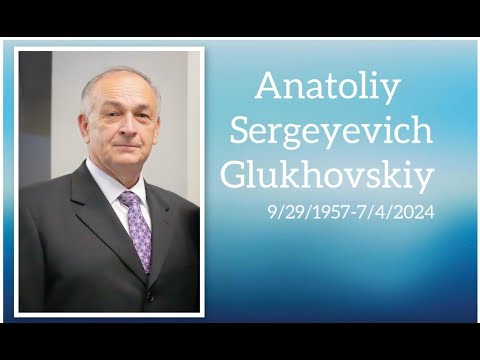
This memorial service honored brother Anatoliy Glukhovskiy, a deacon, preacher and worship leader who helped found the church and went home to the Lord suddenly on July 4, 2024, at the age of sixty-six. His family and fellow ministers remembered him as a sincere man of God, a devoted husband and father of six, who loved Scripture so deeply that he could explain it plainly enough for a child to understand, and who led the congregation in song with his guitar. Speaker after speaker anchored their comfort in 1 Thessalonians 4: believers do not grieve like those who have no hope, because the dead in Christ will rise and we will be caught up to meet the Lord and be with him forever. Drawing on Psalm 84, they reminded the grieving that true strength comes from God, who turns even the valley of weeping into a place of springs. The closing message used the parable of the growing seed in Mark 4: when the grain is ripe, the Lord sends the sickle. Anatoliy's life had borne fruit, and God gathered him at the appointed time, not by accident. The service ended with a tender appeal to receive the seed of life today, to cherish loved ones while they are near, and to be ready at every moment for the meeting that awaits us all.

Sincere Prayer and Trust in Hard Times

Sincere Prayer and Trust in Hard Times

This Wednesday service held two messages, yet both beat with one heart - learning to trust God when life turns difficult. The first, drawn from Psalm 27, the psalm of trust, looks at how David prayed while enemies pressed in around him. He opens not with a list of requests but with a confession of God's strength, refusing to be afraid, longing above all to dwell in the house of the Lord and to be led by God's own hand. In these last and unsettled days, the preacher urged, our prayer must become constant and sincere rather than rote, because heartfelt prayer brings peace and steadies our hope. The second message turns to the prophet Elijah at the brook Cherith, fed by ravens - birds the law called unclean. Elijah did not argue with God's strange way of providing; he simply obeyed. When the brook dried up, that very hardship moved him on to the widow and later to Mount Carmel, where the people repented. In the same way God often arranges uncomfortable circumstances to reposition us where He needs us, for all things work together for good to those who love Him. The God who spoke 'let there be light' over formless darkness still creates from nothing by His word. Even when faith and resources feel gone, calling on Jesus carries His light into the darkest corners of our lives - for healing, for salvation, for change. The evening closed with the apostle Paul's testimony: fight the good fight, finish the race, keep the faith, and live longing for the Lord's appearing.

Hold Fast to the Lord with a Sincere Heart

Hold Fast to the Lord with a Sincere Heart

The midweek service opens with thanksgiving and a reading of John 16:13, where Jesus promises the Holy Spirit, the Spirit of truth, who guides believers into all truth and glorifies Christ. Though Jesus ascended, He left His Spirit so that we can cry "Abba, Father," worship God, and be joined to Him. The preacher reminds the gathered church that we are saved by grace, delivered from the power of darkness into the kingdom of God's beloved Son (Colossians 1:13) and made alive with Christ when we were dead in our sins (Ephesians 2). Drawing on the example of Barnabas in Acts 11, who came to Antioch, saw the grace of God, and urged the believers to remain true to the Lord with a sincere heart, the message calls every believer to cleave to Christ wholeheartedly. Looking back over Israel's history, the preacher notes that the people prospered when they truly served God but suffered when their hearts drifted far from Him even while their lips still honored Him. The unshakable kingdom (Hebrews 12:28) is kept by those who fix their eyes on Jesus and endure to the end. The heart of the sermon is Psalm 91. To merely carry the psalm like a charm accomplishes nothing; its promises belong to the one who actually dwells under the shelter of the Most High, feeding on the bread of God's Word and drinking the living water Christ gives. Such a person is shielded from the snare, the terror by night, and the arrow by day, for God commands His angels over the one who loves Him and knows His name. The preacher urges us to love God by treasuring His Word, to keep our hope on Christ's return, and to hold fast to Him through every trouble until we see His salvation.

Could Not God Do the Same for Me?

Could Not God Do the Same for Me?

The evening opens with Psalm 103:13 - as a father pities his children, so the Lord pities those who fear Him - and turns to a question that quietly haunts many believers: if God blessed, healed, or rescued someone else, could He not do the same for me? Walking through Joseph interpreting the two prisoners' dreams in Genesis 40 and the crowd at Lazarus' tomb in John 11, the preacher shows how naturally we generalize God, assuming that because He acted one way for one person He owes the same to everyone. Hebrews 11 shatters that assumption. The same chapter celebrates those who by faith conquered kingdoms and received their dead raised, and then lists those who were tortured, stoned, sawn in two, and killed by the sword. Same God, same faith, the same will, yet wildly different outcomes. Romans 9 and the image of the Potter and the clay answer the cry for fairness: God shows mercy to whom He wills, and the clay has no right to argue with the Potter. The call is to stop measuring our lives by other people's blessings and to accept God's individual purpose for us. God can, but He is not obligated. Like Peter, who asked about John, we hear, "What is that to you? Follow Me." The safest and happiest place is the center of God's will, even when it is painful or hard to understand, saying, "I agree with You."